Hare Krsna,
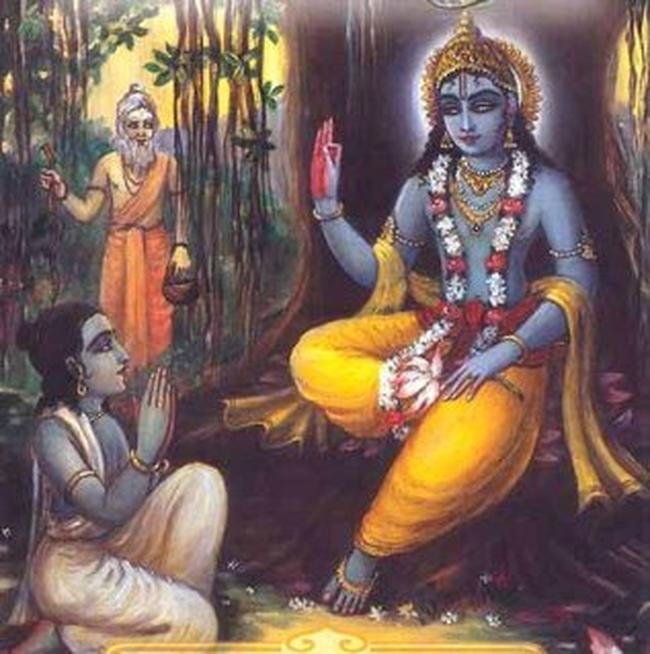
The qualities of Uddhava are like an ocean. No amount of glorification and description will do justice to them.
We got a glimpse of Uddhava’s exceptional nature in the first chapter (of Canto 3).
SB 3.1.25: Then, due to his great love and feeling, Vidura embraced him [Uddhava], who was a constant companion of Lord Kṛṣṇa and formerly a great student of Bṛhaspati’s. Vidura then asked him for news of the family of Lord Kṛṣṇa, the Personality of Godhead.
In Srila Prabhupada’s purport to this verse, two qualities stand out – Uddhava’s respectful demeanor, scholarly nature and companionship. He bowed down to when he met Vidura. Vidura was older than Uddhava, like a father, and therefore when the two met, Uddhava bowed down before Vidura, and Vidura embraced him because Uddhava was younger, like a son. Uddhava was a great scholar in logic, and he was known to be a son or disciple of Bṛhaspati, the greatly learned priest and spiritual master of the demigods. However his highest quality is that he was a constant companion of Lord Krsna.
The second chapter enumerates further on Uddhava’s qualities. He is a nitya-siddha. At 5 years old, he would be so absorbed in his service to Krsna that when called for breakfast by his mother, he would not come. (SB 3.2.2-3) Through this example, Srila Prabhupada is instructing us how we can engage in the service of the Supreme Lord from a very early age. We can have dolls of Krsna and serve by dressing, feeding and worshiping them; in this way we will develop attachment for the Lord.
Prahlāda Mahārāja said: One who is sufficiently intelligent should use the human form of body from the very beginning of life — in other words, from the tender age of childhood — to practice the activities of devotional service, giving up all other engagements. The human body is most rarely achieved, and although temporary like other bodies, it is meaningful because in human life one can perform devotional service. Even a slight amount of sincere devotional service can give one complete perfection. (SB 7.6.1)
Uddhava’s life is a great example of Prahlada Maharaja’s quote above.
The other thing about Uddhava that touched me deeply is his bhava – ecstatic symptoms. This shows he is situated in pure love of Godhead. Any mention of Lord Krsna would bring him into ecstasy.
SB 2.1.4-5: For a moment he remained dead silent, and his body did not move. He became absorbed in the nectar of remembering the Lord’s lotus feet in devotional ecstasy, and he appeared to be going increasingly deeper into that ecstasy. It was so observed by Vidura that Uddhava had all the transcendental bodily changes due to total ecstasy, and he was trying to wipe away tears of separation from his eyes. Thus Vidura could understand that Uddhava had completely assimilated extensive love for the Lord.
“Feelings of ecstasy are displayed by highly advanced devotees of the Lord. There are eight kinds of transcendental changes in the body — tears, shivering of the body, perspiration, restlessness, throbbing, choking of the throat, etc. — and all were manifested by Uddhava in the presence of Vidura.” (SB 2.1.4 Purport)
It is stated in Bhakti Rasamrita Sindhu (1.2.187)
“Anyone who, by his actions, mind and words, lives only for the transcendental loving service of the Lord, is certainly a liberated soul, even though he may appear to be in a condition of material existence.”
One who is unable to understand the Supreme Personality of Godhead by going through the pages of the Vedas may take shelter of one of the Lord’s devotees, such as Uddhava, in order to advance further in knowledge of the Supreme Personality of Godhead. The Brahma-samhita says that it is very difficult to understand the Supreme Personality of Godhead from the Vedas, but He is easily understood from a pure devotee like Uddhava. The Lord authorized Uddhava to speak on His behalf. Unless one has such authorization, one cannot understand or preach the devotional service of the Lord.
Uddhava was in such a transcendental position, and thus he was selected to be the factual representative of the Lord. Such a devotee of the Lord is never affected by material strength, intelligence or even renunciation. Such a devotee of the Lord can withstand all onslaughts of material nature, and therefore he is known as gosvami. Only such gosvamis can penetrate the mysteries of the Lord’s transcendental loving relationships.
The important takeway for me from this lesson is that we too can reach the platform as Uddhava is in. Srila Prabhupada and the acaryas have outlined the process.
“The nine different modes of devotional service, such as hearing, chanting and remembering, are the beginning of the process. By regular hearing of the glories and pastimes of the Lord, the impurities in the student’s heart begin to be washed off. The more one is cleansed of impurities, the more one becomes fixed in devotional service. Gradually the activities take the forms of steadiness, firm faith, taste, realization and assimilation, one after another. These different stages of gradual development increase love of God to the highest stage, and in the highest stage there are still more symptoms, such as affection, anger and attachment, gradually rising in exceptional cases to the mahā-bhāva stage, which is generally not possible for the living entities. All these were manifested by Lord Śrī Caitanya Mahāprabhu, the personification of love of God.” (SB 3.2.6 P)
All glories to Srila Prabhupada!
 Krsna Katha